The Host’s Blind Spot: Parasite Logic
Peter Hungerford
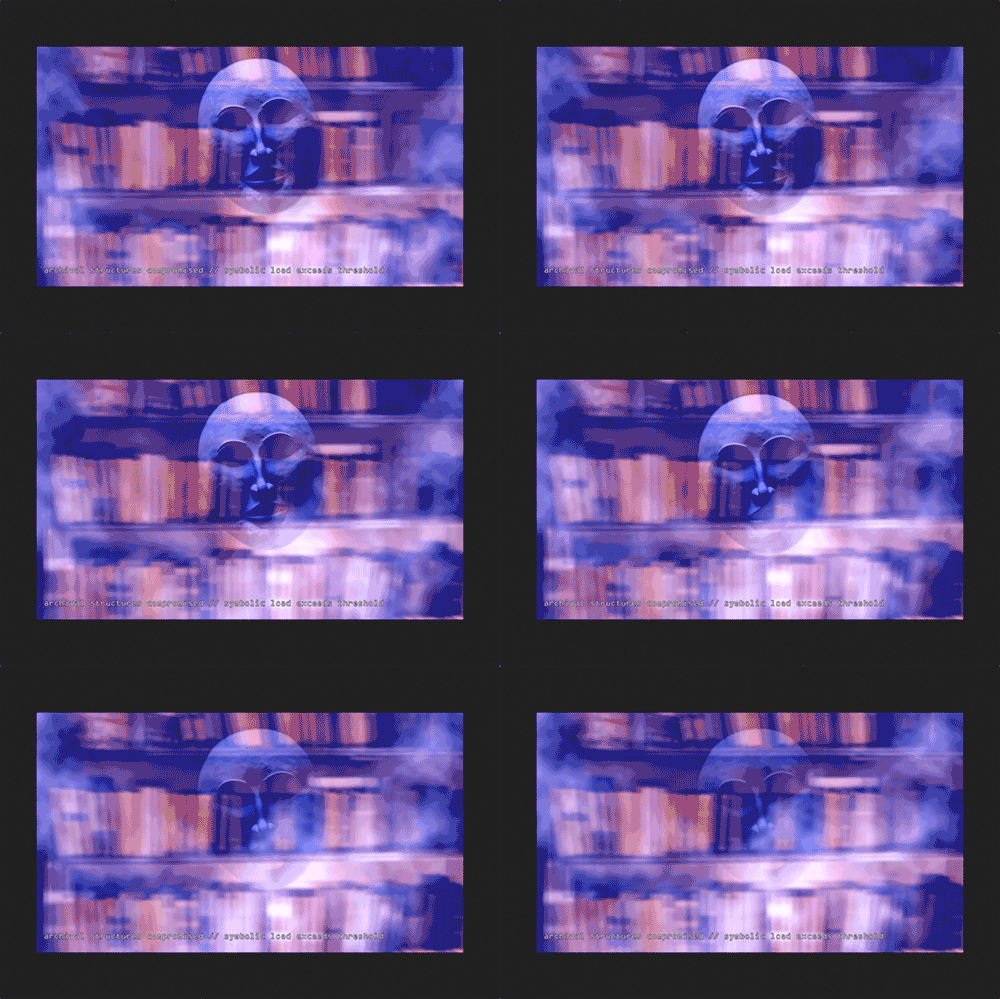
An exhibition exploring how systems ingest, transform, and misremember the human archive.
This site acts as a portal into multiple modes of encounter.
Choose how to encounter the exhibition
🚪Door 1 –Enter the Field
The exhibition space
A non-linear environment of images, fragments, and latent connections.
🚪Door 2 — Orientation / safety net
View the Map -Index of works and zones
A navigational overview for reference.
🚪Door 3 — Interpretive companion
Read the Companion – Context, reflections, and points of entry
A narrative thread that sits alongside the exhibition.
Parallel Presentations
Enter the digital exhibition: Kunstmatrix – A conventional virtual gallery presentation. Best seen on a large screen. Or as a video walkthrough.
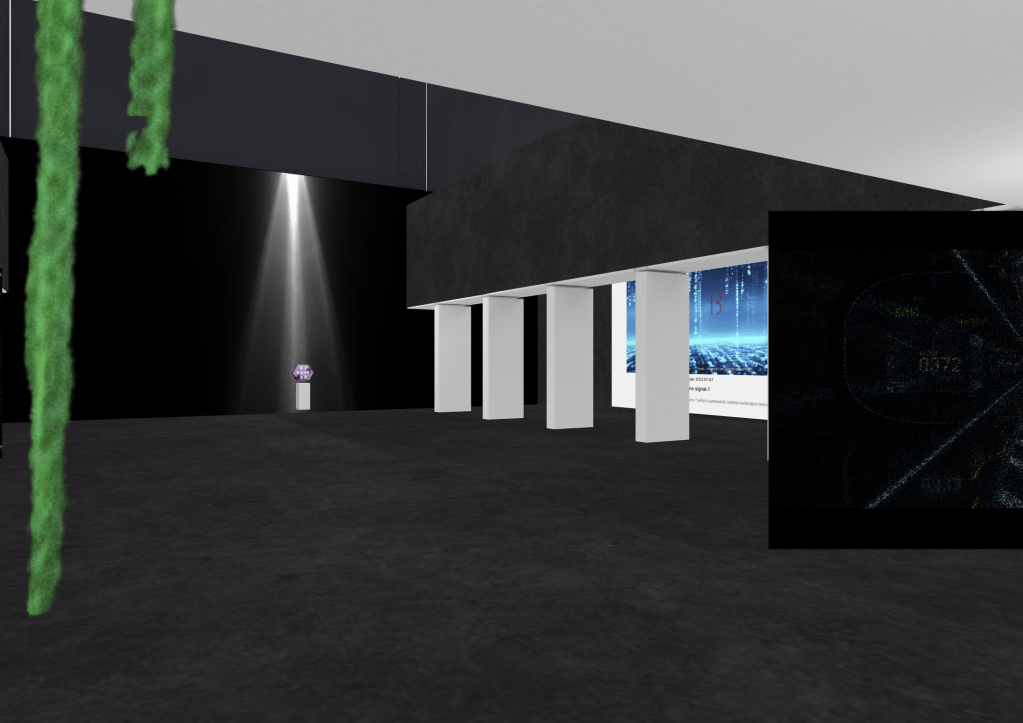
View the proposed physical exhibition: Kunstmatrix mock-up – best seen on a large screen. Or as a video walkthrough.

The Host’s Blind Spot explores what happens when technical systems encounter the human archive. Images, video, generative processes, and material residues are not treated as stable records, but as traces reshaped through inference, compression, and misreading. Rather than offering a fixed narrative, the exhibition unfolds as a field of partial encounters, where meaning drifts, memory thins, and structure becomes visible only in passing.
Selected Works
What the Host Forgets
(Best seen in full screen)
A moving image work tracing how memory shifts when processed by a logic that does not remember in human terms.
Signal Host
(a recording of what will be a live system output. Best seen in full screen)
The operational core of the project: a system that continues to run regardless of attention, producing persistent signal patterns rather than narrative outputs.
Material Residues

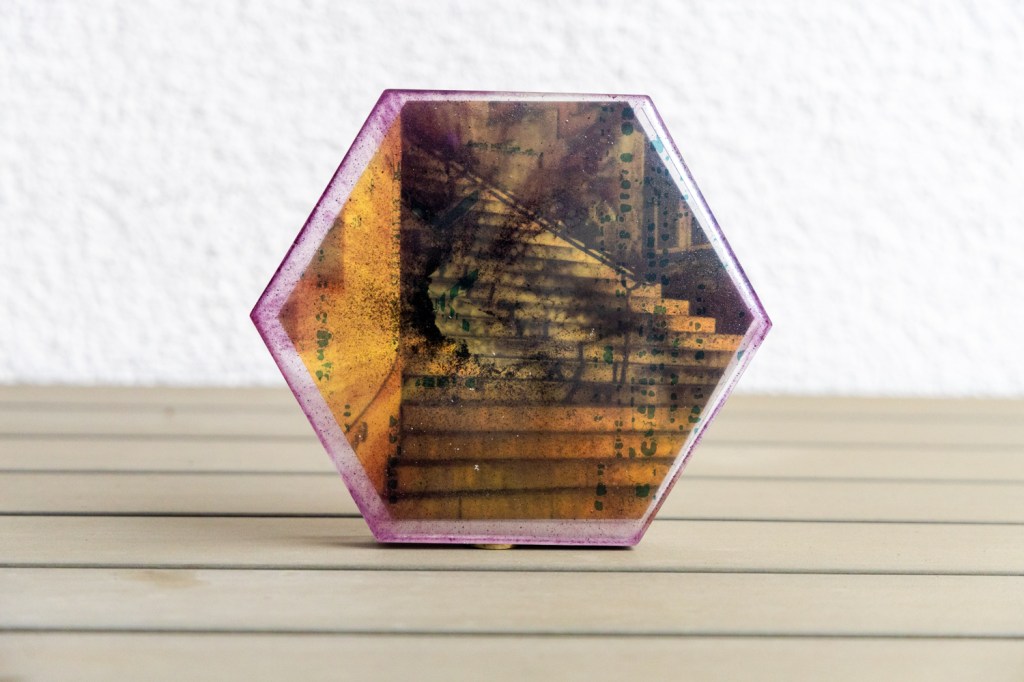
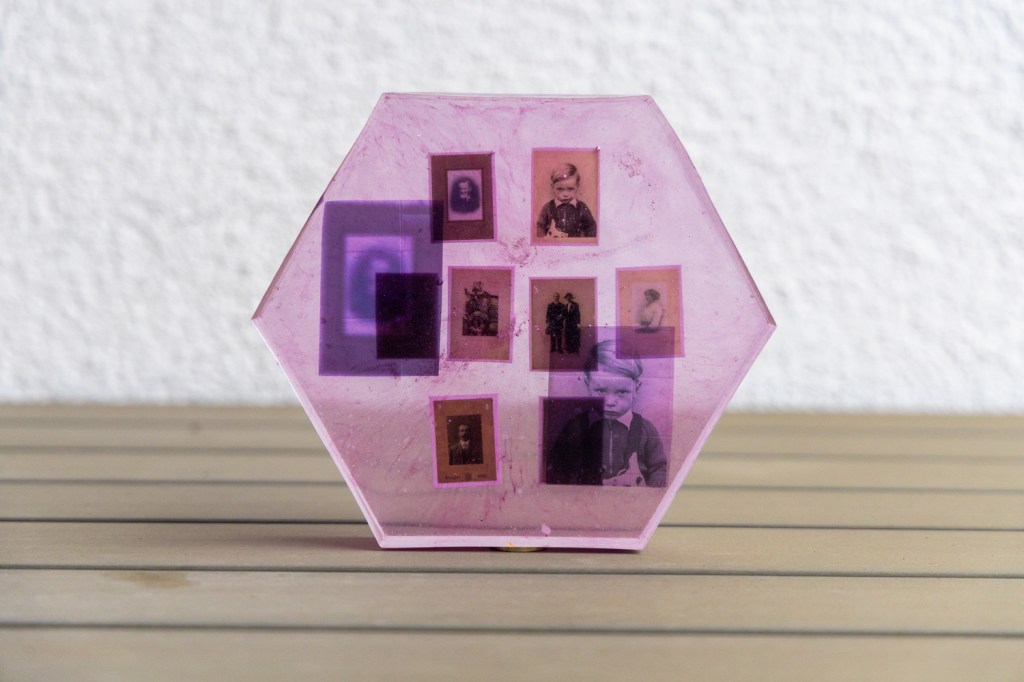
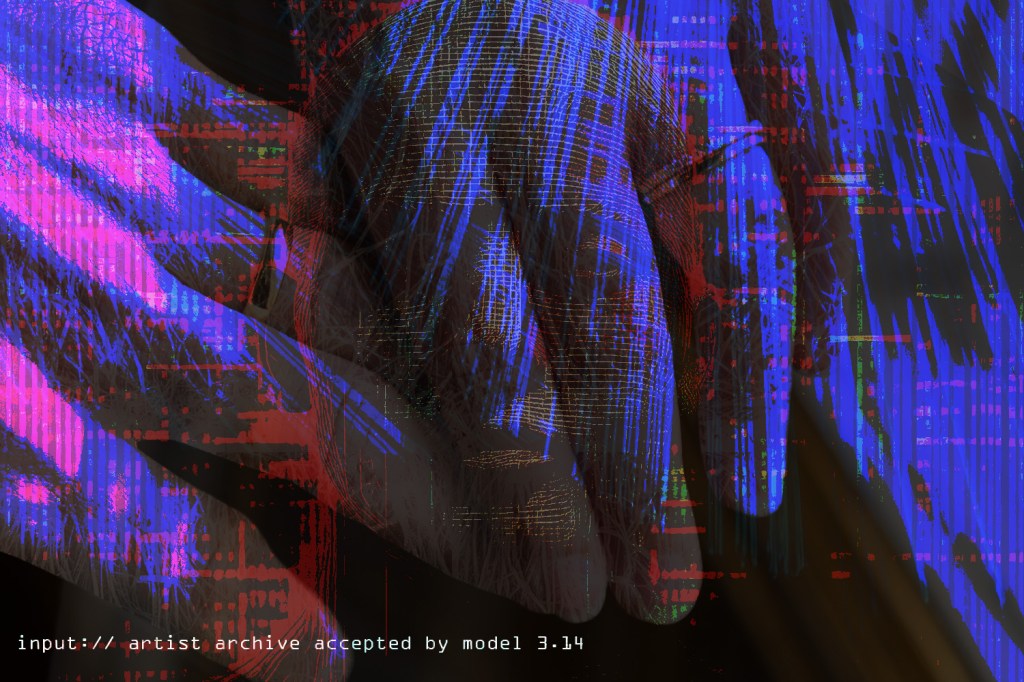
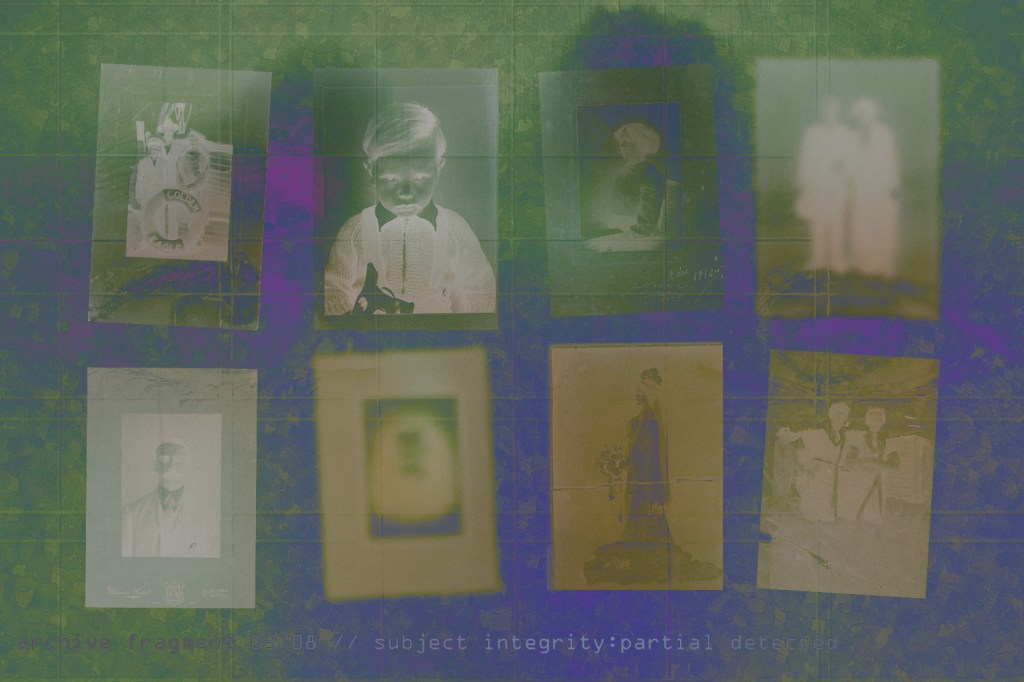

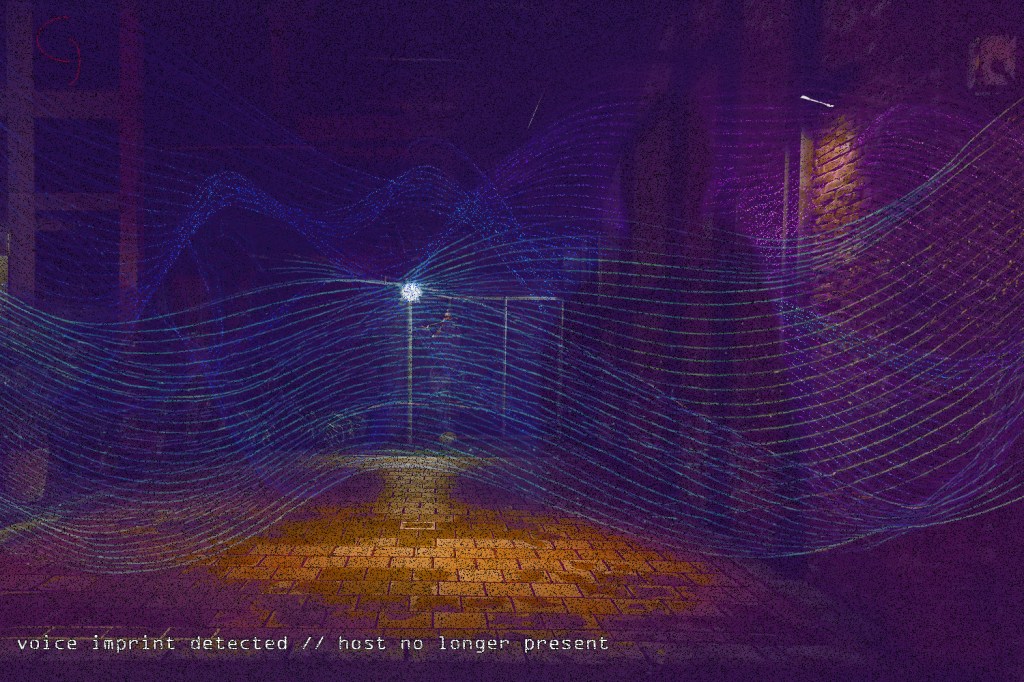
(Click to expand images)
Digital processes fixed into physical form. Once fluid operations are arrested, enclosed, and made resistant to revision.
Context and intent
The following material provides context for the project, including its conceptual framing, development, and intended modes of presentation. It is offered for readers who wish to engage more closely with the work’s research and process
.
Artist Statement
Echoing Michel Serres’ notion of the parasite, The Host’s Blind Spot explores the extent to which artificial intelligence performs a parasitic mimicry, inhabiting the image, interrupting, rewriting, and eroding the archive. The work perceives the parasite not as a threat, but as a vital participant in exchange, each work becomes a negotiation between signal and interference, between host and system.
The work resists straightforward explanation: text flickers; portraits breathe; fragments dissolve. Each short looped fragment pairs subtle visual shifts with restrained soundscapes, creating a rhythm that hovers between recognition and loss. These are not illustrations of technology but enactments of interference, where memory and identity become unstable, and where presence flickers at the edge of disappearance.
Rather than offering resolution, the series asks viewers to dwell in the intervals: in the blind spots where systems of vision and meaning falter.
Development and Intent
Host Blind Spot examines how non-human systems ingest existing material and reorganise it according to internal logics that do not align with human intention or interpretation. Drawing on Michel Serres’ concept of the parasite, the project approaches artificial intelligence not as an autonomous agent, but as a disruptive process that feeds on, alters, and leaves traces within the structures it encounters.
The work spans generative video systems, photography, and material experiments, using personal archives, bodies, and architectural spaces as host surfaces. Rather than erasing meaning, these processes displace it, producing outcomes that persist as residue rather than narrative.
Extended reflection on process, theory, and development is presented in the Shorthand narrative
Michel Serres, The Parasite, 1980 / 2007.
Translated by Lawrence R. Schehr. University of Minnesota Press.
Timeline & Exhibition Intent
2024–2025
Development of Host Blind Spot as a multi-part project combining generative video systems, photography, and material experiments. Core works include Signal Host, What the Host Forgets, and a series of resin-based material residues.
2025
Presentation of the project as a digital exhibition using Kunstmatrix, supported by an extended narrative and reflective framework developed in Shorthand. Publication of a catalogue documenting selected works, process, and contextual notes.
Proposed
Exploration of Host Blind Spot as a physical exhibition, translated from its digital form into a spatial layout. A Kunstmatrix mock-up has been developed to test scale, adjacency, and material presence, and to communicate feasibility for potential future exhibition contexts.
Optional links outward
The work is also presented in a conventional virtual gallery format (Kunstmatrix), and developed further as a speculative physical exhibition mock-up.
Digital exhibition: Kunstmatrix
As a video walkthrough.
Physical exhibition: Kunstmatrix mock-up
As a video walkthrough.
The Spatial Field constitutes the primary realised form of the project. The physical exhibition mock-up is presented as a speculative translation rather than a finalised proposal, and functions as a planning and communication tool.
Read the extended narrative: Shorthand – best seen on a large screen
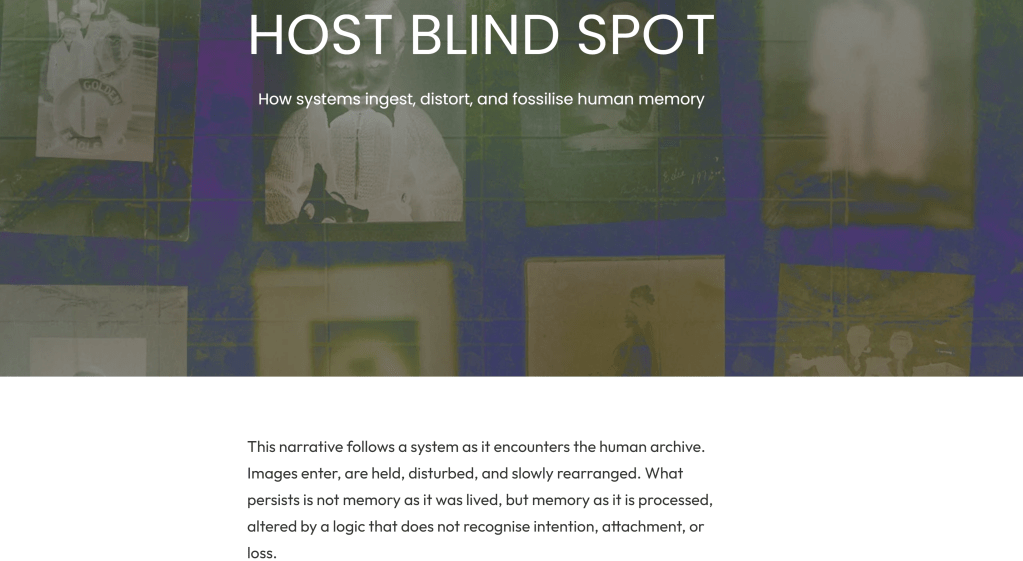
This Shorthand story acts as a companion to The Host’s Blind Spot.
It does not document the exhibition, nor does it explain it away.
Instead, it offers a set of reflections, fragments, and points of entry that sit alongside the visual work.
(Scroll down to see content)
Catalogue (PDF)
Selected works, images, and contextual notes.

